
For months, the otherwise encouraging news and developments at our school have been overshadowed by a difficult situation. The rain has failed to arrive in Raja Ampat for months. Freshwater sources are drying up, while others are becoming increasingly saline. At the same time, prolonged drought and recurring forest and vegetation fires are taking their toll on nature, with smoke drifting across Raja Ampat. Supplying our school and boarding facilities with clean water is becoming increasingly challenging.
Yet even in these difficult circumstances, there is good news to share. Our students are taking responsibility for their homeland, impressing visitors during the UNESCO assessment and gaining valuable experience for their future. This news blog offers an insight into the challenges we face, as well as the positive developments that give us hope and encouragement.
An Exceptional Drought with Far-Reaching Consequences
We have been waiting for rain in Raja Ampat for almost four months. The last substantial rainfall occurred in mid-June. This is highly unusual for a tropical region where rainfall is normally part of everyday life and an essential foundation of the water supply.
The consequences are visible everywhere. Natural freshwater sources are producing less and less water, while increasing amounts of saltwater are finding their way into them. As a result, many water sources can barely be used, and access to clean freshwater is becoming increasingly difficult for numerous villages.
Nature is also suffering considerably. The soil is drying out, plants are withering, and the normally lush tropical forests are losing their vibrant green colour. Vegetation fires continue to break out. On the remote islands, however, resources to fight these fires effectively are often lacking, allowing them to spread further.
Smoke and haze have become so dense in some areas that nearby islands are barely visible from the sea. Even our school's most experienced boat operators currently have to rely on a compass and GPS to navigate. At times, flights to Sorong have even been cancelled. A short video from Raja Ampat gives an impression of just how dramatically our home has changed.
Every Drop Counts: Taking the Long Way to Secure Water
The drought has long since become a daily challenge on our campus, too. Around 80 people live, study and work here. We need water for drinking and cooking, sanitation, washing and the day-to-day running of our boarding facilities.
Our drinking water treatment plant is now operational. However, because of the lack of rain, the groundwater from which drinking water is produced has become too saline for the system to be used as intended. At the same time, our rainwater reserves of around 20,000 litres have been largely depleted after this prolonged dry spell.
We now travel to the only remaining freshwater source in the surrounding area approximately every other day, collect water and transport it back to the school. What would normally fall from the sky and be collected in our tanks must now be brought in with considerable effort. Every available litre also has to be carefully rationed.
The situation is a stark reminder of how vulnerable the water supply can be on a remote island — and how important long-term solutions are.
Securing Our Water Supply for the Future
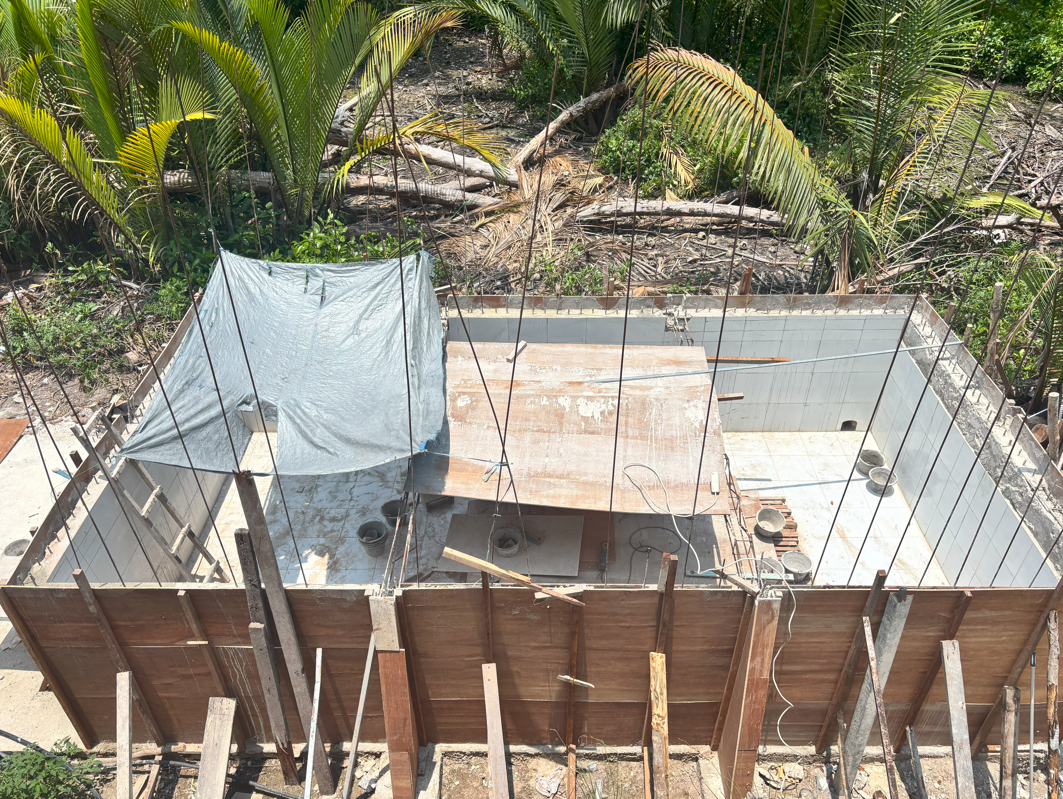
Alongside managing the immediate situation, we are preparing our school to cope better with future dry periods. As reported in our previous newsletter, work to expand our rainwater storage capacity by a further approximately 70,000 litres is now in full swing.
Our goal is to collect as much rainwater as possible during the wetter months and build up larger reserves, enabling us to better withstand extended periods without rain. We plan to add further storage capacity in the future.
These measures bring financial challenges as well as organisational ones. We are therefore grateful for every contribution that helps us secure a reliable water supply for the long term.
If you would like to support this effort specifically, you can make a donation with the reference “Water Supply”. Donations marked accordingly will be used directly to help secure our school's water supply. Every contribution helps us continue providing our students with reliable access to
UNESCO Global Geopark: Our Students Demonstrate Their Knowledge of Their Homeland
Since 2023, Raja Ampat has been part of the international UNESCO Global Geoparks network. These geoparks combine the protection of natural and cultural heritage with education, local community involvement and sustainable regional development.
Child Aid Papua and our school are official stakeholders of the Raja Ampat UNESCO Global Geopark in the fields of education and culture. We want to inspire young people to understand, appreciate and protect the unique natural environment of their homeland.
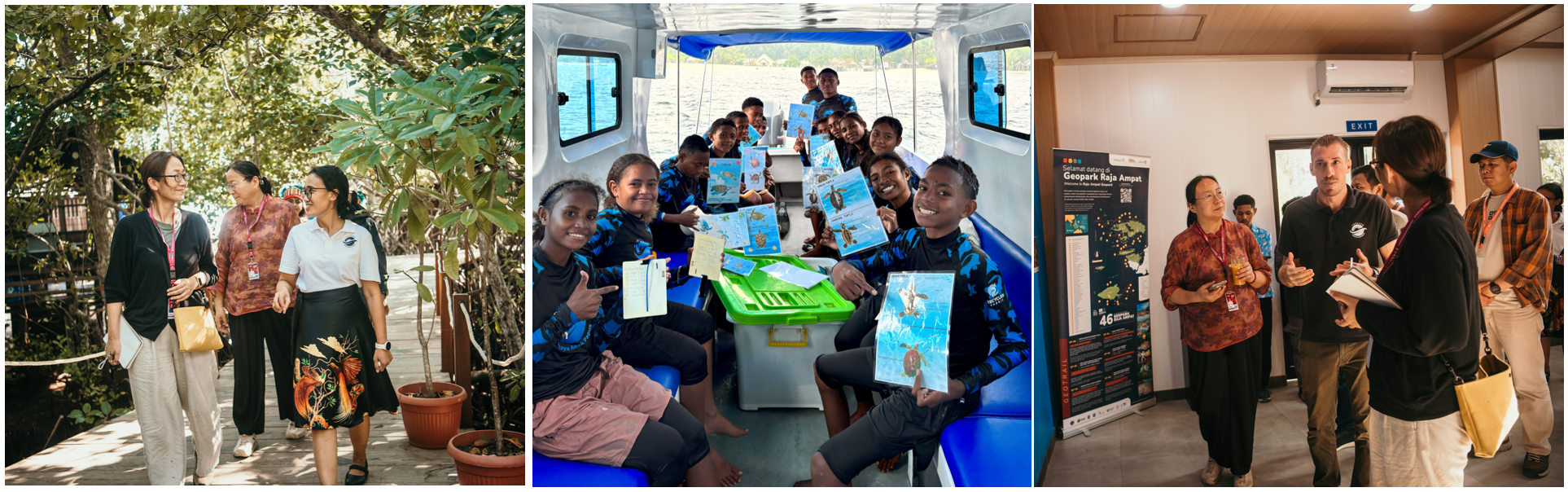
As part of the latest assessment, international assessors from Japan also visited our school in Sawinggrai. The focus was on our students, who were asked about Raja Ampat, its ecosystems, nature conservation and the importance of their homeland. At the heart of the assessment was a crucial question: Is environmental education genuinely understood and put into practice, or does it remain merely theoretical knowledge?
Our students answered the questions successfully. They demonstrated their knowledge of the local environment, their understanding of the importance of natural habitats and their ability to explain why protecting them is vital to Raja Ampat's future.
The assessment of Raja Ampat as a whole was also successful. Formal confirmation of the revalidation by the relevant UNESCO bodies is still pending. Nevertheless, the outcome is valuable recognition of our educational work.
Our aim is to empower a generation of young people who know and appreciate their homeland and will one day take responsibility for protecting it themselves. The current drought, in particular, shows just how closely people's future is connected to a healthy natural environment.
From Raja Ampat into the World of Work
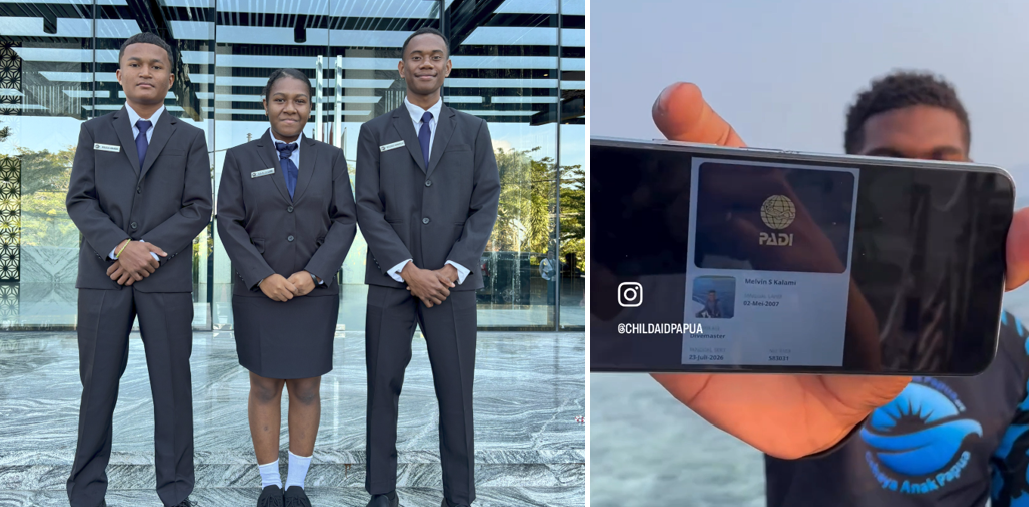
Our Year 11 students have begun their multi-month internships. They are putting their knowledge into practice and discovering new areas of work.
Some are gaining experience in hospitality and tourism, while others are learning about marine and nature conservation. Their placements also include coral restoration projects and research into the study and protection of sharks.
For some students, this means leaving Raja Ampat for the first time for an extended period and learning to find their feet in a new environment. They take on responsibilities, experience different ways of working and gain insights into potential career paths.
In the long term, we hope they will one day bring their knowledge and skills back to Raja Ampat, helping shape the sustainable development of their homeland as qualified professionals and role models.
Our New School Boat Has Arrived
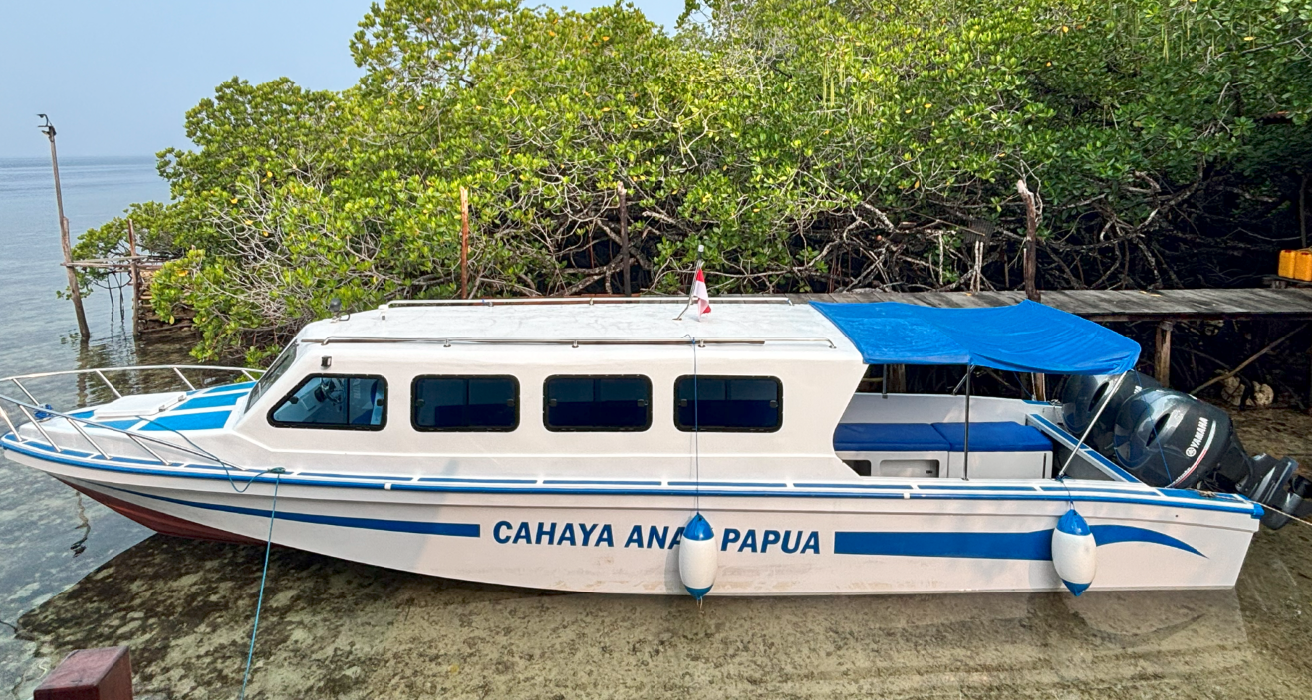
After around three months of construction in Ambon, our new school boat has finally arrived in Raja Ampat. It strengthens the supply of essential goods to our school, as food, building materials and other supplies have to be transported by sea to our remote island. During the current drought, the boat is especially important for bringing in the additional freshwater we need.
It also improves safety. During the monsoon season, journeys in our previous boat had become increasingly difficult and, at times, dangerous.
The new boat also opens up additional opportunities for learning. As part of our Marine Science activities, students can explore Raja Ampat's coral reefs and marine biodiversity first-hand. In this way, we combine practical learning with a deeper understanding of the need to protect the region's unique marine environment.
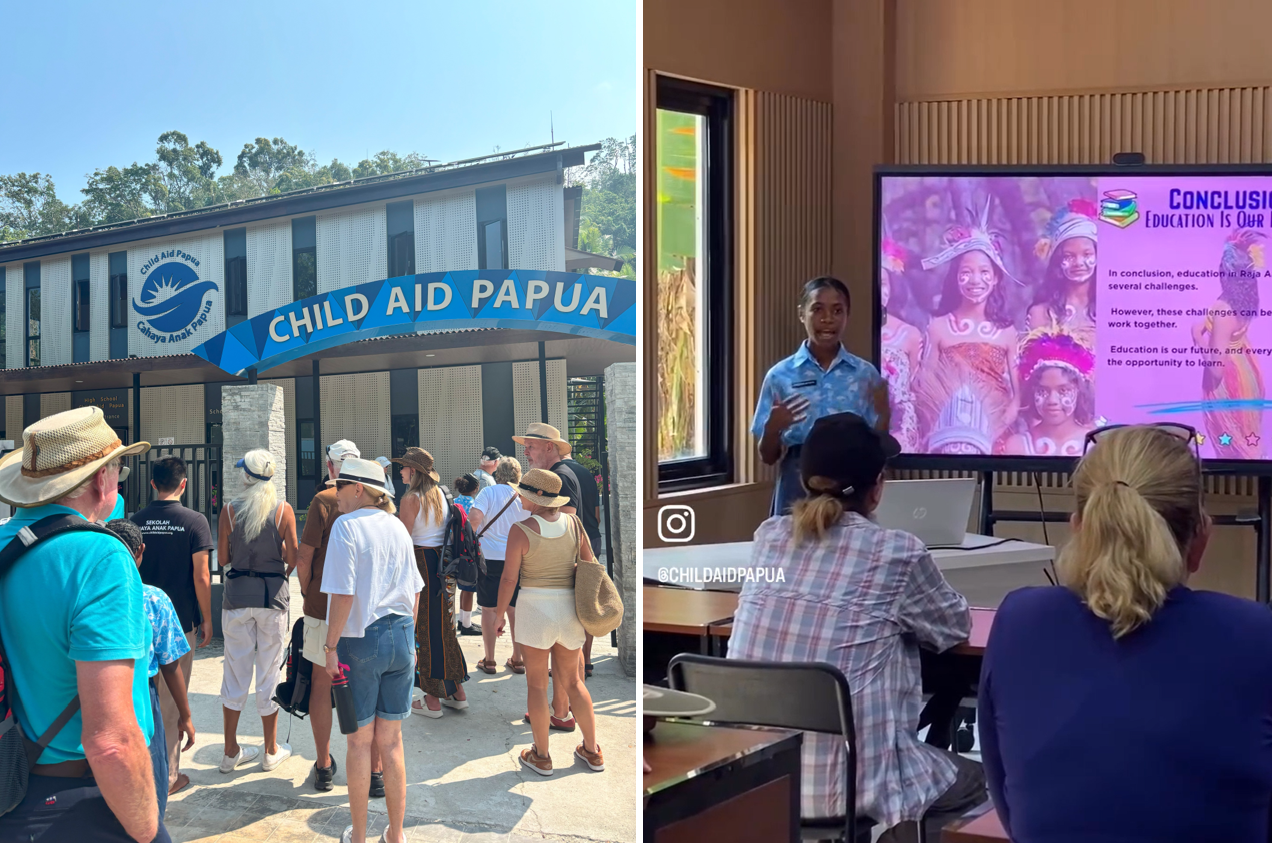
Our Students Present Their School to 200 International Guests
A particularly memorable experience was the visit of around 200 international guests travelling on a Silversea cruise ship.
Our students took the lead in welcoming them. They guided the guests around the campus and gave presentations in English about life in Papua, the challenges facing their homeland and the work of Child Aid Papua.
For the students, this was a valuable opportunity to put their English skills into practice and speak in front of an international audience. The feedback from the guests was exceptionally positive.
Encounters like these help build our students' confidence and show how they can use their skills to represent their homeland with pride to people from all over the world.
Moving Forward Together, Step by Step
The prolonged drought challenges us every day and highlights the urgent need to secure our water supply for the long term. At the same time, we see our students learning, taking responsibility and discovering new opportunities for their future.
The successful UNESCO assessment, the experience they are gaining through their internships and the additional opportunities provided by our new school boat all give us confidence.
For now, above all, we are hoping for one thing: that after months of drought, rain will finally return to Raja Ampat. Until then, we will continue working to guide our school through this challenging period and build the foundations for a secure future for our students.
Thank you sincerely for accompanying us on this journey.
More articles
Eine bedeutende Anerkennung der Regierung und weitere Erfolgsgeschichten
Die Entstehung der Projekte "Oceania" und "Ocean Blue" und ein neuer Sportplatz
Zwei erfolgreiche Missionen in Sorong, Jonas in der Schlagzeile und eine Jahresendfeier die kein Auge trocken liess